
















Machine type
 Prestige XL series (L2, XL2, XL2 Pro, XL3, XL4)
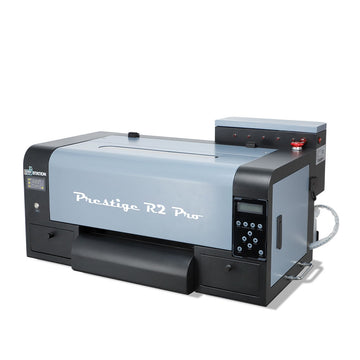
 DTF Station Prestige R2 Pro
 DTF Station Prestige R1
 DTF Station Prestige R2 (original)
 Prestige X6
 DTF Station Prestige A4
 DTF Station Prestige A3+ and A3+ R
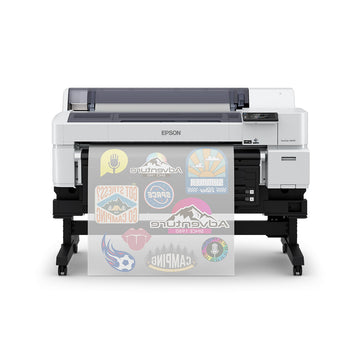
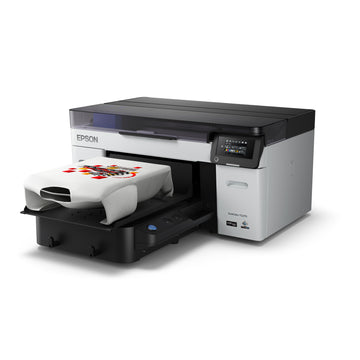
 Epson SureColor G6070 DTF printer
 Mimaki TxF300-1600
 Mimaki TxF330-800
 STS XPD-924D DTF Printer (Mutoh)
 STS VJ-628D DTF Printer (Mutoh)
 DTF Station Vega S17
 STS XpertJet 1682D (XPJ-1682D) 64 inch DTF Printer
 STS XPD-724 DTF Printer (Mutoh)


 Hotronix Fusion IQ, Air Fusion IQ and Dual Air Fusion IQ
 Geo Knight DK20S and DK20SP Digital Knight Swing-Away Presses
 DTF Station Maxima and Proxima Dual Heat Presses
 Hotronix Auto Open Clam and Hover Heat Press
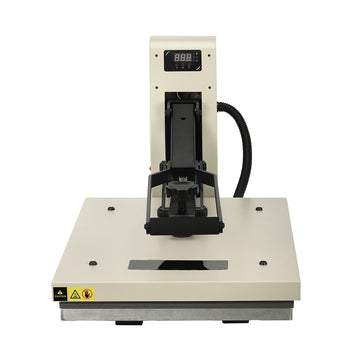
 DTF Station Prisma Auto Heat Press
 DTF Station Prisma Dual Heat Press
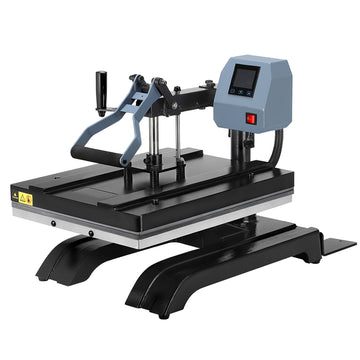
 DTF Station Prisma Swing Heat Press
 Insta 718, 728 and 828 Automatic Swing-Away Heat Presses
 DTF Station Prisma Sentry Heat Press
 Geo Knight DC16 and DC16AP Digital Combo Swing-Away Presses
 Geo Knight DK Digital Clamshell Presses: DK20, DK16, DKA Auto, DK8 Label and DK7 Cap
 Hotronix Auto Open Cap Press and 360 IQ Hat Press
 Hotronix Craft Heat Press 9 x 12
 Hotronix Mighty Mug Heat Press
 Insta 256 and 288 Manual Swing-Away Heat Presses
 Insta 907 Dual Station Shuttle Label Heat Press


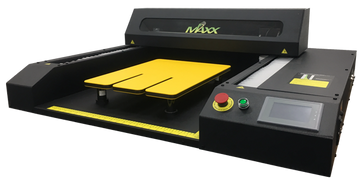
 Viper MAXX pretreatment machine
 Ecofreen Mister-T2 and Mister-T2 Pro pretreatment machines
 Pearl Elite and Pearl PTM DTG pretreatment machines
 Viper XPT-1000 pretreatment machine
 Lawson Silver-Jet and Silver-Jet V2 DTG Pretreat Sprayers
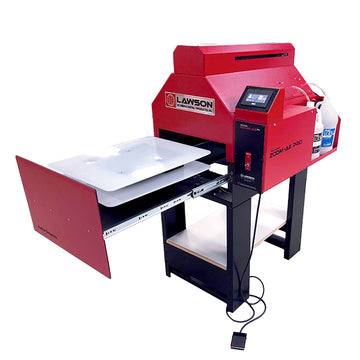
 Lawson Zoom-AE DTG pretreatment machine
 Viper MINI handheld DTG pretreatment machine


Brand
Prestige XL series (L2, XL2, XL2 Pro, XL3, XL4)
DTF Station Prestige R2 Pro
DTF Station Prestige R1
DTF Station Prestige R2 (original)
Prestige X6
DTF Station Prestige A4
DTF Station Prestige A3+ and A3+ R
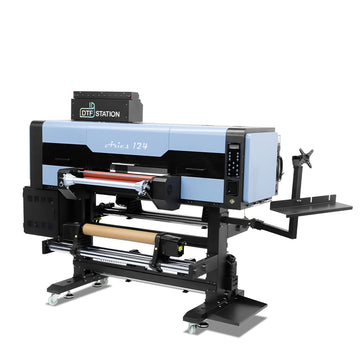
 DTF Station Aries 124 UV DTF printer
 Miro DTF Powder Shakers: Miro 13 Max, 16, 24 and 36
 DTF Station Aries 213 and Aries 113 UV DTF printers
 Seismo L16R and L24R DTF Powder Shaker and Dryer
 Phoenix Air 16x20 DTF Curing Oven
DTF Station Maxima and Proxima Dual Heat Presses
DTF Station Prisma Auto Heat Press
DTF Station Prisma Dual Heat Press
DTF Station Prisma Swing Heat Press
DTF Station Vega S17
DTF Station Prisma Sentry Heat Press
 DTF Station Seismo V36R DTF Powder Shaker and Dryer
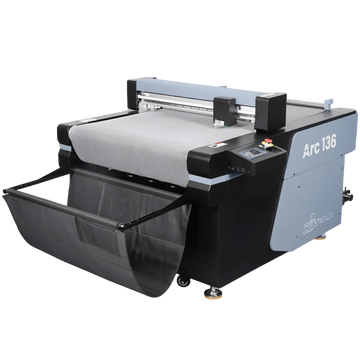
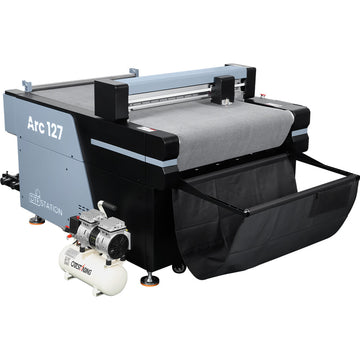
 DTF Station Arc 127 automatic cutter for DTF and UV DTF film
 Epson SureColor F2100
Epson SureColor G6070 DTF printer
 Epson SureColor F2270
 Epson SureColor F3070
 Epson SureColor F570
 Epson SureColor F170
 Epson SureColor F6470 and F6470H
 Epson SureColor F6370
 Epson SureColor F7200
 Epson SureColor P-Series photo printers (P700, P900, P6570, P8570)
 Epson SureColor T-Series CAD and technical printers
 Epson SureColor S-Series (S40600, S60600, S80600)
BBC flash dryer settings: height, heat control and flash time for plastisol and nylon, and fixing a flash that won't heat or scorches
For a plastisol flash with a BBC Black Flash or Afford-A-Flash, start with the heater face 2 to 3 inches above the platen at full heat for 5 to 10 seconds, after a 5 to 10 minute warm-up. BBC wants the ink at about 180 to 200°F, just tacky to the touch. If the flash won't get hot, BBC says it is almost always the outlet: too little voltage or amperage for the model.
Flashing heats the ink just enough to gel it, so the next color prints on top without smearing. BBC's manuals give starting points. Your heater's wattage, the room and the ink all change the result, so test on a spare shirt first.
Starting settings (Black Flash, Afford-A-Flash)
| Job | Height | Heat control | Time |
|---|---|---|---|
| Plastisol flash | 2 to 3 in | 100% | 5 to 10 s |
| Nylon preheat | 2 to 3 in | 30 to 40% | 5 to 10 s |
| Nylon flash | 2 to 3 in | 100% | 5 to 10 s |
| Plastisol cure | 2 to 3 in | 100% | 30 to 40 s |
| Nylon cure | 2 to 3 in | 60 to 100% | 15 to 20 s |
Height is from the heater face to the printing surface. The heat control column only applies to models with a built-in dial or BBC's in-line heat control. Without one, raise or lower the heater instead.
Auto Flash on an automatic press
| Job | Height | Heat control | Time |
|---|---|---|---|
| Plastisol flash | 4 to 5 in | 100% | 5 to 10 s |
| Plastisol cure | 4 to 5 in | 100% | 30 to 40 s |
| Water-based | 4 in | 60 to 100% | 1 min |
| Nylon flash | 2 to 3 in | 100% | 5 to 10 s |
Run it
-
Warm up
Make sure nothing is within 3 ft under the heater face, switch on, and wait 5 to 10 minutes. On switched models the indicator light shows the heater is on.
-
Set the height
Start at the height in the table and level the face parallel to the platen. Two people should move the heater, and never by its hot surfaces.
-
Check the ink
BBC says a plastisol flash needs the ink at about 180 to 200°F, or whatever your ink maker specifies. Check with a temperature gun or heat labels. A good flash is just tacky to the touch, not wet.
-
Shut down
Switch off (or unplug the Afford-A-Flash) and leave the heater swung away, with nothing within 3 ft under it, for 10 to 15 minutes while it cools. Never leave it unattended while hot.
Common problems
| Problem | What BBC says |
|---|---|
| Not heating | Almost always the supply: an outlet with too little voltage or amperage for the model. Check the volts and amps on the label against the circuit, with no extension cord. |
| Scorching | Flash gets faster as you print and shirts scorch. The platen heats up to around 140°F after an hour of printing. Move the heater higher, shorten the dwell, or add a heat control or Flash-Amatic. |
| Light tan mark | A very light scorch usually washes out, but adjust your settings. |
| Poor adhesion | The next color won't stick or fades in the wash: the underbase was overflashed. Shorten the time or raise the heater. |
| Water-based | Infrared alone takes about twice as long on water-based. The Air Flash adds forced air. |
If the dryer malfunctions, or the heater face or cord is damaged, switch it off, unplug it and don't use it again until a qualified technician has checked it. A punctured element face is a shock hazard.
Text us a photo or short video at (562) 609-4996 with your model number if it still won't heat on a correct circuit.
Common questions
How long should I flash plastisol?
BBC's starting point is 5 to 10 seconds at full heat with the heater 2 to 3 inches above the platen. On the Auto Flash it is 4 to 5 inches. Test, because wattage and room conditions change it.
Why are my flashes getting faster during the run?
The platen warms to about 140°F after an hour. Raise the heater or shorten the time as you go, or use a heat control or the Flash-Amatic timer.
Can I cure shirts with the flash?
You can, but BBC doesn't recommend it. A plastisol cure takes 30 to 40 seconds per print. A conveyor dryer is much faster.
How close should the heater be?
BBC's rule of thumb is about 2 inches from the garment. Closer flashes faster. Move it back if shirts overheat.
My flash will not get hot. What should I check first?
The outlet and circuit. BBC says nearly every case is too little voltage or amperage. Compare the label on the heater with the circuit, and remove any extension cord.
- BBC Industries Black Flash owner's manual, ENM-4074-00
- BBC Industries Afford-A-Flash owner's manual, ENM-4070-00
- BBC Industries Auto Flash owner's manual, ENM-4126-00
- BBC Industries Air Flash owner's manual, ENM-4108-00
- BBC Industries FAQs
- AA support requests about flash dryers and screen printing curing, 2024 to 2026