

















Machine type
 Prestige XL series (L2, XL2, XL2 Pro, XL3, XL4)
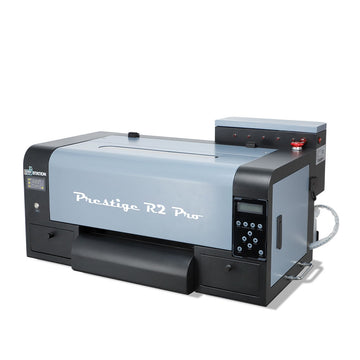
 DTF Station Prestige R2 Pro
 DTF Station Prestige R1
 DTF Station Prestige R2 (original)
 Prestige X6
 DTF Station Prestige A4
 DTF Station Prestige A3+ and A3+ R
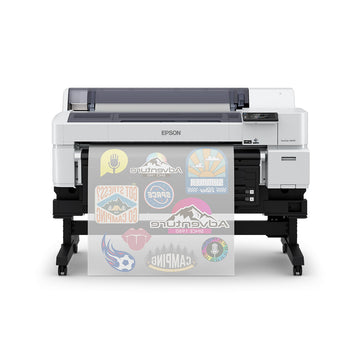
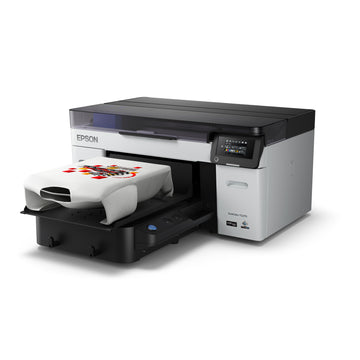
 Epson SureColor G6070 DTF printer
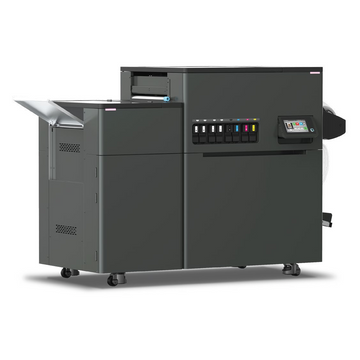
 Mimaki TxF300-1600
 Mimaki TxF330-800
 STS XPD-924D DTF Printer (Mutoh)
 STS VJ-628D DTF Printer (Mutoh)
 DTF Station Vega S17
 STS XpertJet 1682D (XPJ-1682D) 64 inch DTF Printer
 STS XPD-724 DTF Printer (Mutoh)


 Hotronix Fusion IQ, Air Fusion IQ and Dual Air Fusion IQ
 Geo Knight DK20S and DK20SP Digital Knight Swing-Away Presses
 DTF Station Maxima and Proxima Dual Heat Presses
 Hotronix Auto Open Clam and Hover Heat Press
 DTF Station Prisma Auto Heat Press
 DTF Station Prisma Dual Heat Press
 DTF Station Prisma Swing Heat Press
 Insta 718, 728 and 828 Automatic Swing-Away Heat Presses
 DTF Station Prisma Sentry Heat Press
 Geo Knight DC16 and DC16AP Digital Combo Swing-Away Presses
 Geo Knight DK Digital Clamshell Presses: DK20, DK16, DKA Auto, DK8 Label and DK7 Cap
 Hotronix Auto Open Cap Press and 360 IQ Hat Press
 Hotronix Craft Heat Press 9 x 12
 Hotronix Mighty Mug Heat Press
 Insta 256 and 288 Manual Swing-Away Heat Presses
 Insta 907 Dual Station Shuttle Label Heat Press


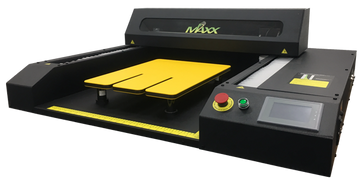
 Viper MAXX pretreatment machine
 Ecofreen Mister-T2 and Mister-T2 Pro pretreatment machines
 Pearl Elite and Pearl PTM DTG pretreatment machines
 Viper XPT-1000 pretreatment machine
 Lawson Silver-Jet and Silver-Jet V2 DTG Pretreat Sprayers
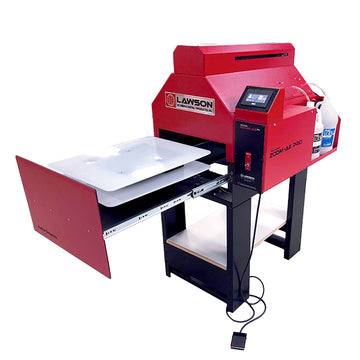
 Lawson Zoom-AE DTG pretreatment machine
 Viper MINI handheld DTG pretreatment machine


Brand
Prestige XL series (L2, XL2, XL2 Pro, XL3, XL4)
DTF Station Prestige R2 Pro
DTF Station Prestige R1
DTF Station Prestige R2 (original)
Prestige X6
DTF Station Prestige A4
DTF Station Prestige A3+ and A3+ R
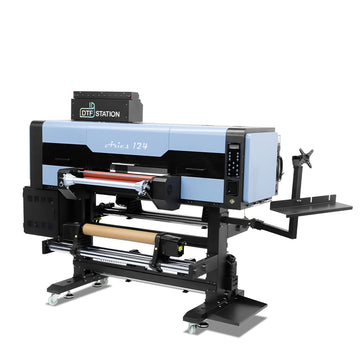
 DTF Station Aries 124 UV DTF printer
 Miro DTF Powder Shakers: Miro 13 Max, 16, 24 and 36
 DTF Station Aries 213 and Aries 113 UV DTF printers
 Seismo L16R and L24R DTF Powder Shaker and Dryer
 Phoenix Air 16x20 DTF Curing Oven
DTF Station Maxima and Proxima Dual Heat Presses
DTF Station Prisma Auto Heat Press
DTF Station Prisma Dual Heat Press
DTF Station Prisma Swing Heat Press
DTF Station Vega S17
DTF Station Prisma Sentry Heat Press
 DTF Station Seismo V36R DTF Powder Shaker and Dryer
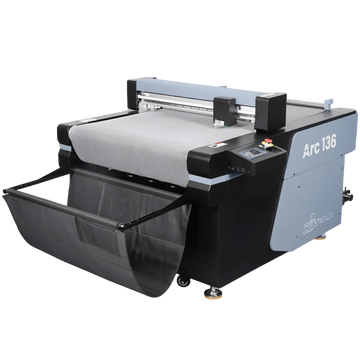
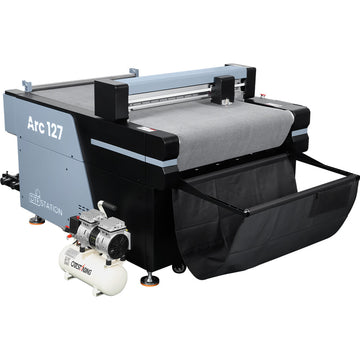
 DTF Station Arc 127 automatic cutter for DTF and UV DTF film
 Epson SureColor F2100
Epson SureColor G6070 DTF printer
 Epson SureColor F2270
 Epson SureColor F3070
 Epson SureColor F570
 Epson SureColor F170
 Epson SureColor F6470 and F6470H
 Epson SureColor F6370
 Epson SureColor F7200
 Epson SureColor P-Series photo printers (P700, P900, P6570, P8570)
 Epson SureColor T-Series CAD and technical printers
 Epson SureColor S-Series (S40600, S60600, S80600)
GFP roll laminators: 200 Series cold, 300 and 500 Series top heat support
GFP 200, 300 and 500 Series laminators press a top film web onto a bottom web between two rubber nip rollers set by a hand wheel. Most problems come from nip pressure and brake tension: too much pressure wrinkles the output, too little leaves it cloudy. Keep adhesive off the bottom roller with a carrier or kraft paper, and clean adhesive off the rollers before you leave for the day.

Setup & first print
Troubleshooting
- GFP laminator nip pressure, brake tension and rewind clutch: settings for flat, clear laminatingOn GFP laminators, lower the top roller with the hand wheel only until it just touches the webs (on the...
- GFP laminator troubleshooting: wrinkles, curl, cloudy laminate, rollers not turning and no heatOn GFP laminators, wrinkles on both webs mean too much nip pressure, cloudy laminate means too little pressure or a...
Techniques & settings
- GFP laminator jobs: laminating sheets on a sled, kraft paper, roll to roll, and mounting to boardsOn a GFP laminator, laminate single sheets on a sled as wide as the film, batches of sheets on a...
- GFP laminator nip pressure, brake tension and rewind clutch: settings for flat, clear laminatingOn GFP laminators, lower the top roller with the hand wheel only until it just touches the webs (on the...
Manuals & downloads
Watch GFP's video: 563TH tutorial
More videos
Embedded from the manufacturer's official channel.
About the GFP roll laminators: 200 Series cold, 300 and 500 Series top heat
GFP (Graphic Finishing Partners) roll laminators apply pressure-sensitive overlaminate and mounting adhesive to prints. All of them work the same way: a top supply roll of film and a bottom supply roll of media or kraft paper meet between two rubber nip rollers, the gap is set with a hand wheel, brakes keep the webs tight, and a rewind shaft takes up the film liner. The top heat models add a heated top roller to help the adhesive flow.
| Series | Models | Type | Width |
|---|---|---|---|
| 200 | 255C, 263C | Cold | 55 or 63 in |
| 300 | 355TH, 363TH | Top heat | 55 or 63 in |
| 500 | 563TH | Top heat | 63 in |
The top heat models go up to 122°F. All three take 3 in film cores, run objects up to 1/2 in thick continuously, and up to 1 in on the foot pedal.
Maintenance at a glance
| When | What to do |
|---|---|
| Every job | Use a carrier, kraft paper or full-width media so adhesive never touches the bottom roller |
| End of day | Clean adhesive off the rollers; don't leave it overnight |
| Cleaning | Rubber eraser, or isopropyl alcohol on a shop towel |
| Long idle | Raise the top roller and unplug the machine |
| After hot use | Let it cool before you cover it |
Where to put it
GFP specifies a level floor, 50 to 104°F, and 30 to 80% humidity with 55% ideal, in a clean room (film rolls attract dust by static). Allow an area of at least 8 x 10 ft. Keep it out of direct sun, away from heaters, coolers and blowing air, and away from dust and vibration. Plug it into a grounded outlet near the machine at the voltage on its label.