

















Machine type
 Prestige XL series (L2, XL2, XL2 Pro, XL3, XL4)
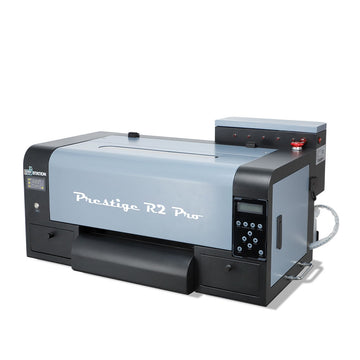
 DTF Station Prestige R2 Pro
 DTF Station Prestige R1
 DTF Station Prestige R2 (original)
 Prestige X6
 DTF Station Prestige A4
 DTF Station Prestige A3+ and A3+ R
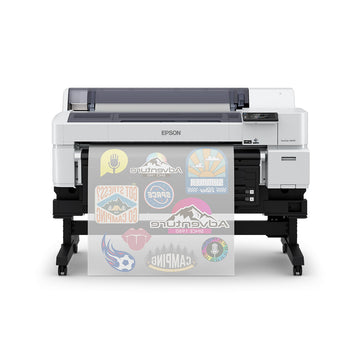
 Epson SureColor G6070 DTF printer
 Mimaki TxF300-1600
 Mimaki TxF330-800
 STS XPD-924D DTF Printer (Mutoh)
 STS VJ-628D DTF Printer (Mutoh)
 DTF Station Vega S17
 STS XpertJet 1682D (XPJ-1682D) 64 inch DTF Printer
 STS XPD-724 DTF Printer (Mutoh)


 Hotronix Fusion IQ, Air Fusion IQ and Dual Air Fusion IQ
 Geo Knight DK20S and DK20SP Digital Knight Swing-Away Presses
 DTF Station Maxima and Proxima Dual Heat Presses
 Hotronix Auto Open Clam and Hover Heat Press
 DTF Station Prisma Auto Heat Press
 DTF Station Prisma Dual Heat Press
 DTF Station Prisma Swing Heat Press
 Insta 718, 728 and 828 Automatic Swing-Away Heat Presses
 DTF Station Prisma Sentry Heat Press
 Geo Knight DC16 and DC16AP Digital Combo Swing-Away Presses
 Geo Knight DK Digital Clamshell Presses: DK20, DK16, DKA Auto, DK8 Label and DK7 Cap
 Hotronix Auto Open Cap Press and 360 IQ Hat Press
 Hotronix Craft Heat Press 9 x 12
 Hotronix Mighty Mug Heat Press
 Insta 256 and 288 Manual Swing-Away Heat Presses
 Insta 907 Dual Station Shuttle Label Heat Press


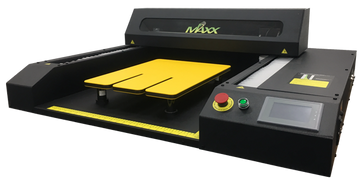
 Viper MAXX pretreatment machine
 Ecofreen Mister-T2 and Mister-T2 Pro pretreatment machines
 Pearl Elite and Pearl PTM DTG pretreatment machines
 Viper XPT-1000 pretreatment machine
 Lawson Silver-Jet and Silver-Jet V2 DTG Pretreat Sprayers
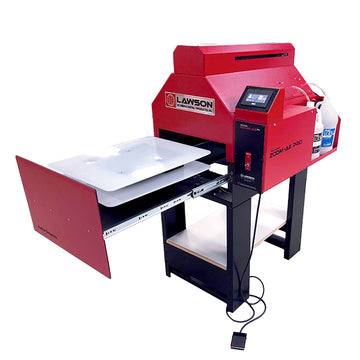
 Lawson Zoom-AE DTG pretreatment machine
 Viper MINI handheld DTG pretreatment machine


Brand
Prestige XL series (L2, XL2, XL2 Pro, XL3, XL4)
DTF Station Prestige R2 Pro
DTF Station Prestige R1
DTF Station Prestige R2 (original)
Prestige X6
DTF Station Prestige A4
DTF Station Prestige A3+ and A3+ R
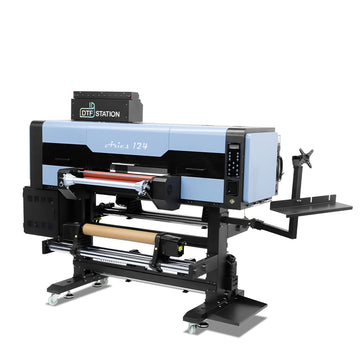
 DTF Station Aries 124 UV DTF printer
 Miro DTF Powder Shakers: Miro 13 Max, 16, 24 and 36
 DTF Station Aries 213 and Aries 113 UV DTF printers
 Seismo L16R and L24R DTF Powder Shaker and Dryer
 Phoenix Air 16x20 DTF Curing Oven
DTF Station Maxima and Proxima Dual Heat Presses
DTF Station Prisma Auto Heat Press
DTF Station Prisma Dual Heat Press
DTF Station Prisma Swing Heat Press
DTF Station Vega S17
DTF Station Prisma Sentry Heat Press
 DTF Station Seismo V36R DTF Powder Shaker and Dryer
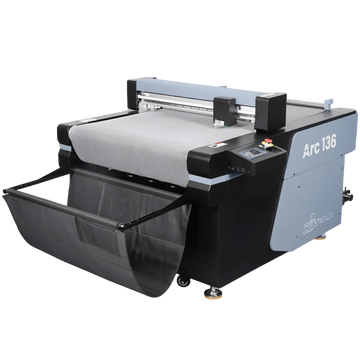
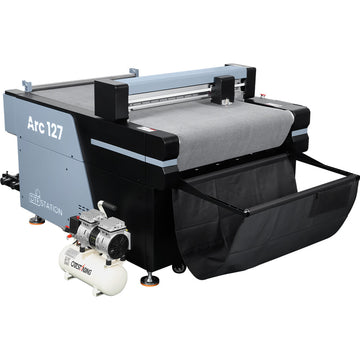
 DTF Station Arc 127 automatic cutter for DTF and UV DTF film
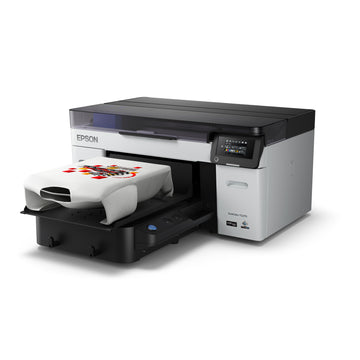
 Epson SureColor F2100
Epson SureColor G6070 DTF printer
 Epson SureColor F2270
 Epson SureColor F3070
 Epson SureColor F570
 Epson SureColor F170
 Epson SureColor F6470 and F6470H
 Epson SureColor F6370
 Epson SureColor F7200
 Epson SureColor P-Series photo printers (P700, P900, P6570, P8570)
 Epson SureColor T-Series CAD and technical printers
 Epson SureColor S-Series (S40600, S60600, S80600)
DTF powder sticking to bare film, uneven powder or white haze: fixes
Powder that sticks to the clear parts of the film is almost always moisture or static: damp film, damp or old powder, or a preheat plate that's too cool. Raise the preheat or front plate temperature, use fresh dry powder, and in humid rooms warm the film about 1 second before powdering. Patchy coverage usually means uneven application or film that isn't centered and flat in the shaker.
Match your symptom
| What you see | Most likely cause | Go to |
|---|---|---|
| Powder clinging to clear, unprinted film | Damp film, damp or old powder, preheat too cool, or static | Steps 1 to 3 |
| White haze or thick feel around prints on dark garments | Too much powder left on, often in humid rooms | Step 4 |
| Patchy powder, print lifts in sections | Uneven application, or film not flat and centered | Step 5 |
| Scratches on prints, gritty bits in the powder | Powder clumped from moisture or heat | Step 6 |
| Transfers peeling as they roll onto the take-up | Dust mixed into the powder | Step 6 |
Step by step
-
Dry the film
Keep film rolls out of the printer and in a cool, dry place when you're not printing. In a humid room, warm the printed film for about 1 second before powdering to drive off moisture and static.
-
Raise the preheat
On a Miro, start the preheating plate at 50°C and raise it gradually toward 80°C only if powder isn't releasing. On a Seismo L16R or L24R, the front plate runs 50 to 90°C, with 80°C as a good reference in high humidity. Raising the shaker intensity also helps.
-
Deal with static
On a Seismo, attach the loose ground wire to the front heating plate if static is a problem. Keep the room's humidity in a normal range: DTF Station recommends 40 to 60% for the Seismo shakers.
-
Shake off the excess
When powdering by hand or with a Seismo S20, cover the wet ink evenly, then shake or flick off everything that isn't stuck to ink. On the S20, a few presses of the powder plate is usually enough to cover a sheet. Leftover powder is what causes the haze and thick hand feel.
-
Get even coverage
On roll shakers, keep the powder level up to the media wheel rod but not over it, and make sure the film is centered and lies flat against the front plate. Film hanging past the edge of the plate heats unevenly. Adjust the media wheel if the film tilts.
-
Replace contaminated powder
Powder that has clumped into hard bits will scratch prints, and dust in the powder makes transfers peel off as they roll up. Sift reused powder through a 60-mesh screen, keep covers closed so dust stays out, and switch to fresh powder if the problem continues.
Powder away from your printer, and never on a DTG printer's platen. Color Prime warns that powder drawn into a printer's intake fan can damage the electronics, and that damage may not be covered under warranty.
Text a close-up photo of the powdered film to (562) 609-4996 and tell us your room humidity if you know it.
Watch DTF Station's video: too much powder, no powder and uneven powder
Embedded from the manufacturer's official channel.
Common questions
Why does powder stick everywhere, not just to the ink?
Moisture or static on the film, or damp, old powder. Warming the film removes both, which is what the preheating plate on a roll shaker is for.
What preheat temperature should I use on a Miro?
DTF Station's operation guides start at 50°C and raise it toward 80°C only if powder isn't releasing from bare film.
Will a ground wire help with static?
On the Seismo L16R and L24R, DTF Station suggests attaching the loose ground wire to the front heating plate if static is a problem.
Is the white haze on black shirts from the ink?
Usually it's excess powder that wasn't shaken off, made worse by humidity. It shows most on black and non-cotton garments.
- DTF Station: DTF General Troubleshooting (video)
- DTF Station: Miro 13 Max operation guide
- DTF Station: Miro 24 operation guide
- DTF Station: Seismo L16R and L24R operation guide
- DTF Station: Seismo L16R and L24R quick start guide
- DTF Station: Seismo L24R user manual (PDF)
- DTF Station: Seismo S20 user manual (PDF)
- DTF Station technical documentation
- AA and DTF Station support requests about powder residue and uneven powder, 2024 to 2026