


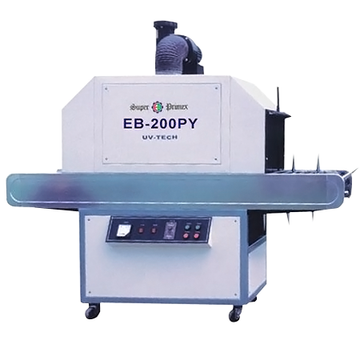
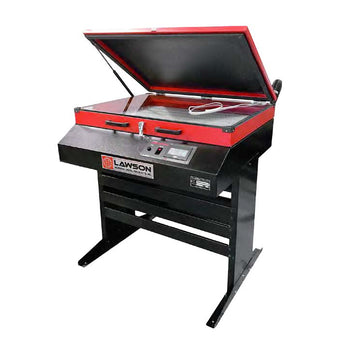
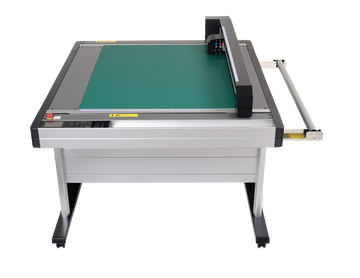
















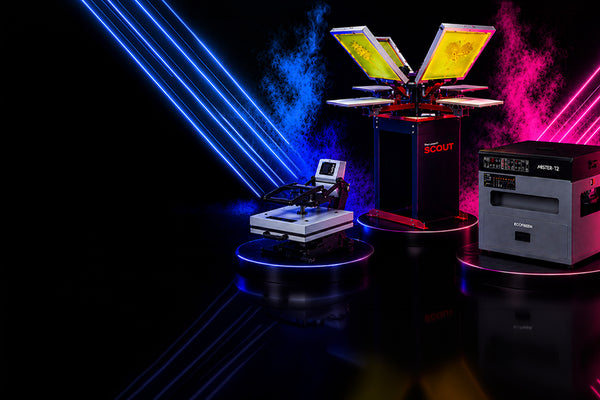
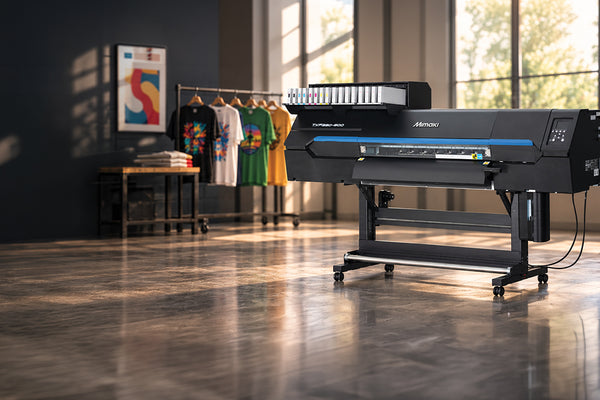
Machine type
 Prestige XL series (L2, XL2, XL2 Pro, XL3, XL4)
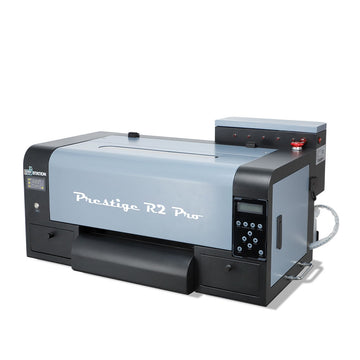
 DTF Station Prestige R2 Pro
 DTF Station Prestige R1
 DTF Station Prestige R2 (original)
 Prestige X6
 DTF Station Prestige A4
 DTF Station Prestige A3+ and A3+ R
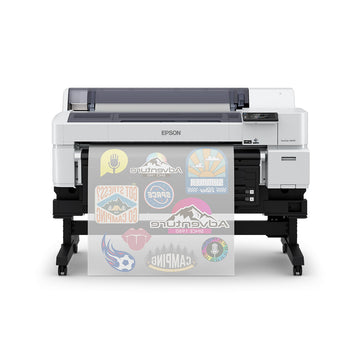
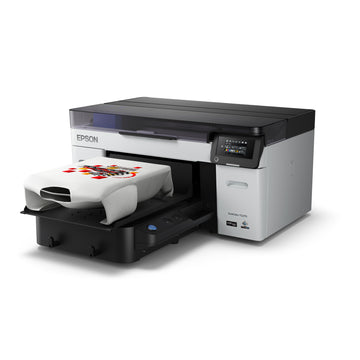
 Epson SureColor G6070 DTF printer
 Mimaki TxF300-1600
 Mimaki TxF330-800
 STS XPD-924D DTF Printer (Mutoh)
 STS VJ-628D DTF Printer (Mutoh)
 DTF Station Vega S17
 STS XpertJet 1682D (XPJ-1682D) 64 inch DTF Printer
 STS XPD-724 DTF Printer (Mutoh)


 Hotronix Fusion IQ, Air Fusion IQ and Dual Air Fusion IQ
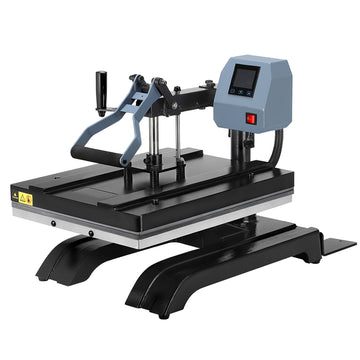
 Geo Knight DK20S and DK20SP Digital Knight Swing-Away Presses
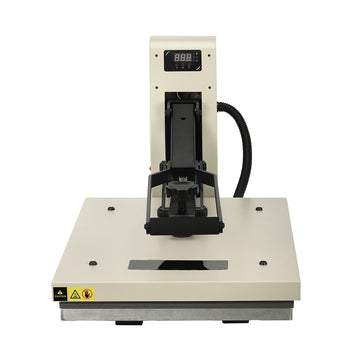
 DTF Station Maxima and Proxima Dual Heat Presses
 Hotronix Auto Open Clam and Hover Heat Press
 DTF Station Prisma Auto Heat Press
 DTF Station Prisma Dual Heat Press
 DTF Station Prisma Swing Heat Press
 Insta 718, 728 and 828 Automatic Swing-Away Heat Presses
 DTF Station Prisma Sentry Heat Press
 Geo Knight DC16 and DC16AP Digital Combo Swing-Away Presses
 Geo Knight DK Digital Clamshell Presses: DK20, DK16, DKA Auto, DK8 Label and DK7 Cap
 Hotronix Auto Open Cap Press and 360 IQ Hat Press
 Hotronix Craft Heat Press 9 x 12
 Hotronix Mighty Mug Heat Press
 Insta 256 and 288 Manual Swing-Away Heat Presses
 Insta 907 Dual Station Shuttle Label Heat Press


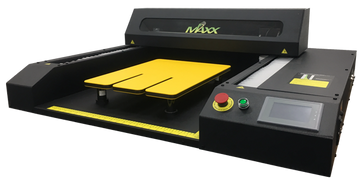
 Viper MAXX pretreatment machine
 Ecofreen Mister-T2 and Mister-T2 Pro pretreatment machines
 Pearl Elite and Pearl PTM DTG pretreatment machines
 Viper XPT-1000 pretreatment machine
 Lawson Silver-Jet and Silver-Jet V2 DTG Pretreat Sprayers
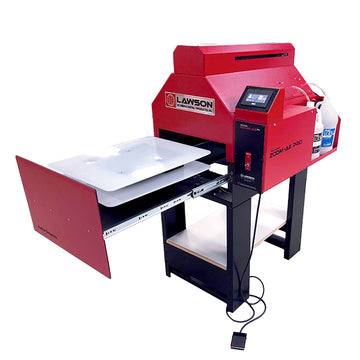
 Lawson Zoom-AE DTG pretreatment machine
 Viper MINI handheld DTG pretreatment machine


Brand
Prestige XL series (L2, XL2, XL2 Pro, XL3, XL4)
DTF Station Prestige R2 Pro
DTF Station Prestige R1
DTF Station Prestige R2 (original)
Prestige X6
DTF Station Prestige A4
DTF Station Prestige A3+ and A3+ R
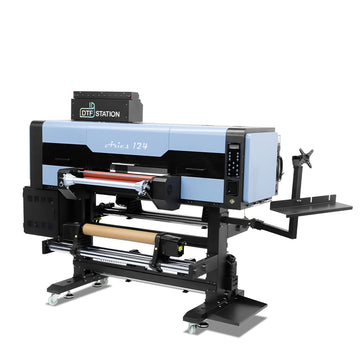
 DTF Station Aries 124 UV DTF printer
 Miro DTF Powder Shakers: Miro 13 Max, 16, 24 and 36
 DTF Station Aries 213 and Aries 113 UV DTF printers
 Seismo L16R and L24R DTF Powder Shaker and Dryer
 Phoenix Air 16x20 DTF Curing Oven
DTF Station Maxima and Proxima Dual Heat Presses
DTF Station Prisma Auto Heat Press
DTF Station Prisma Dual Heat Press
DTF Station Prisma Swing Heat Press
DTF Station Vega S17
DTF Station Prisma Sentry Heat Press
 DTF Station Seismo V36R DTF Powder Shaker and Dryer
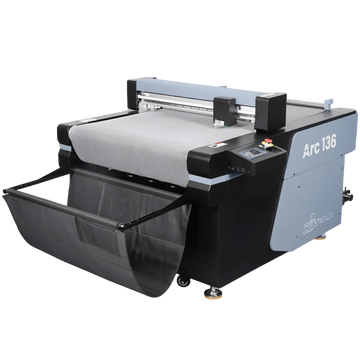
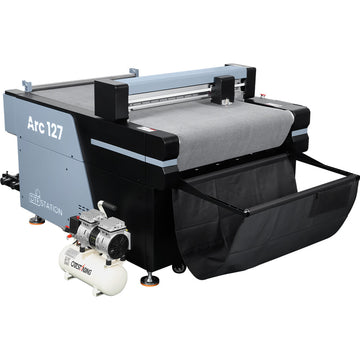
 DTF Station Arc 127 automatic cutter for DTF and UV DTF film
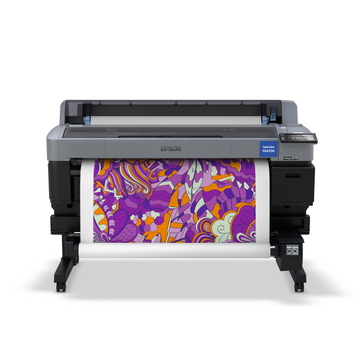
 Epson SureColor F2100
Epson SureColor G6070 DTF printer
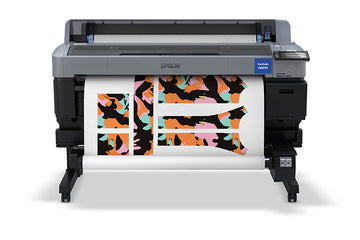
 Epson SureColor F2270
 Epson SureColor F3070
 Epson SureColor F570
 Epson SureColor F170
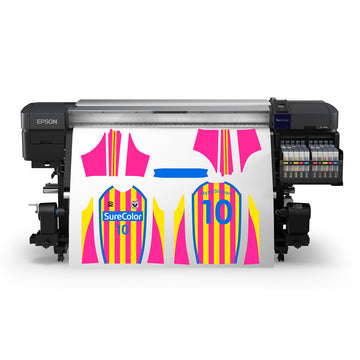
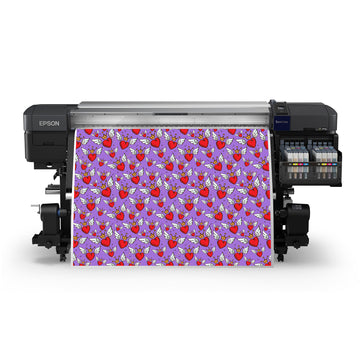
 Epson SureColor F6470 and F6470H
 Epson SureColor F6370
 Epson SureColor F7200
 Epson SureColor P-Series photo printers (P700, P900, P6570, P8570)
 Epson SureColor T-Series CAD and technical printers
 Epson SureColor S-Series (S40600, S60600, S80600)
Summa S Class 3 knife change and setup: depth, pressure, drag offset and tangential knife calibration
Summa ships the S Class 3 with the knife turned in to zero depth, so it won't cut until you turn it out. On a tangential (T or TC) head the nosepiece controls depth: turn the holder until the tip just shows below the nosepiece, then use the knife pressure test until the vinyl cuts through and the backing is only lightly scratched. Run Calibrate knife every time you fit a new tangential blade. On a drag knife, set the knife offset after every blade change.
Match your symptom
| What you see | Most likely cause | Go to |
|---|---|---|
| New cutter cuts nothing | Knife shipped at zero depth | Step 2 or 3 |
| Vinyl not cut through | Pressure or depth too low, worn blade | Step 4 |
| Backing cut through | Depth or pressure too high | Step 4 |
| Corners rounded or overcut (drag) | Wrong knife offset | Step 5 |
| Shapes don't close, ragged corners (tangential) | Knife not calibrated | Step 6 |
| Cut line breaks every 12 mm (0.5 in) | Dirty nosepiece | Step 7 |
The knives are razor sharp. Every tap on the touch screen can start a test or move the head and media, so keep your hands out of the cutting area.
Step by step
-
Tell the cutter which tool is fitted
Load media, tap the tool shown on the main screen and pick the tool that is really in the head (tangential knife, drag knife, pen or, on TC models, the creasing tool). The cutter has no sensor to identify the tool, so if the setting and the actual tool differ, pressure and offset will be wrong. Changing to a drag knife adds the Knife offset setting; changing to a pen turns offset off.
-
Drag knife (D models): change the blade and set depth
Loosen the head clamp screw and lift out the holder. Turn the knurled knob clockwise to push the old blade out and pull it free. To fit a new one, back the knob off until the aluminium piece comes out, push the blunt conical end of the blade into the narrow end of the holder, then tap the holder upside down on a solid surface to seat it. Turn the knob clockwise until the tip sticks out just enough for the material. For most vinyl the tip is barely visible. Push the holder down into the clamp and tighten the screw.
-
Tangential knife (T and TC models): change the blade and set depth
Turn the knife holder counterclockwise until it rises and lift it out. The nosepiece sits underneath. Ease the old blade out of the holder by gently prying in the groove between blade and holder with something like a small flat screwdriver. Press the new blade in firmly (the install tool helps); it is seated when you can't pull it out by hand.
Slide the nosepiece in from the side until it snaps in place. Holding it with one hand, lower the holder into the shaft, turn it counterclockwise until the alignment pin drops into the notch, then clockwise to engage the thread. Keep turning clockwise until the blade tip just shows below the nosepiece.
On a tangential head, depth comes from the nosepiece, not from pressure. Don't try to make up for too little blade with more pressure.
-
Run the knife pressure test
Tap the pressure value on the main screen, set a value with the arrows or the keypad and tap the test button. The cutter cuts a small test pattern. Weed the rectangle and look at the backing: the vinyl should be cut through and the backing only lightly scratched, never cut. Thicker vinyl needs more depth, thinner vinyl less. Confirm the value when it's right, and repeat whenever you load a different material.
On a tangential head, Summa gives a quick depth check: raise the correct pressure by 150 g and test again. If the knife now cuts through the backing, the blade is out too far, so turn it in.
-
Drag knife: set the knife offset
Open the menu, tap Knife offset, enter a value and run the test. Compare the cut with the correct, too low and too high examples in the manual's knife offset section, adjust and repeat until the corners are right. Summa's typical values: 0.41 to 0.45 for standard knives, 0.90 to 0.97 for sandblast knives, 0.49 to 0.52 for the 60 degree knife. Set the offset at every blade change and check it when the blade wears.
-
Tangential knife: run Calibrate knife
With media loaded and the tangential knife fitted, open the menu and tap Calibrate knife. Summa says to set the origin first, then the lateral and longitudinal values, running the test after each change. In the test pattern, rectangles 1 and 2 should weed out cleanly, the fan pattern 3 should have one clean straight cut in the middle, and the squares 4 should line up and be the same size. Patterns 1 and 4 matter most.
For the origin: if the clean line in pattern 3 sits too far right, increase the origin value; too far left, decrease it. For lateral and longitudinal corrections, compare your weeded rectangles with the pictures in the manual's "Making corrections" section. Calibrate every time you fit a new tangential blade.
-
Keep the nosepiece clean
If the cut line is interrupted every 12 mm (0.5 in), vinyl residue has built up in the nosepiece. Turn the holder counterclockwise to remove the knife, note which way the nosepiece faces, push it out, clear the residue with a brush or tweezers, refit it and reinstall the knife.
Still cutting badly?
If cuts are inconsistent across the width or along the job even with a fresh, calibrated blade, the cause is usually media tracking: see our guide to loading media on the S Class 3. Otherwise text us a photo of your weeded test pattern at (562) 609-4996.
Watch Summa's video: changing the blade on the S3
More videos
Embedded from the manufacturer's official channel.
Common questions
Why won't my new S Class 3 cut at all?
Summa sets the knife depth to zero for shipping. Turn the knife out before the first job, then run the pressure test.
How do I know the depth and pressure are right?
Run the knife pressure test and weed the rectangle. The vinyl should be cut all the way through and the blade tip should only scratch the silicone coating of the backing. It should never cut through the backing.
What knife offset should I use on the drag head?
Summa gives typical values of 0.41 to 0.45 for standard knives, 0.90 to 0.97 for sandblast knives and 0.49 to 0.52 for the 60 degree knife. Start in that range and fine-tune with the offset test.
Do I need to calibrate a new tangential blade?
Yes. Summa says to calibrate every time the tangential knife is replaced, and to check the calibration again when the blade starts to wear. Patterns 1 and 4 matter most.
Can I use another brand of blade?
Summa says the S Class 3 only performs to specification with genuine Summa tools.
When should I use a sandblast knife?
Summa recommends sandblast knives for material thicker than 0.25 mm.
- Summa S Class 3 User's Manual (Rev 006)
- AA support requests about Summa cut quality, 2024 to 2026