
















Machine type
 Prestige XL series (L2, XL2, XL2 Pro, XL3, XL4)
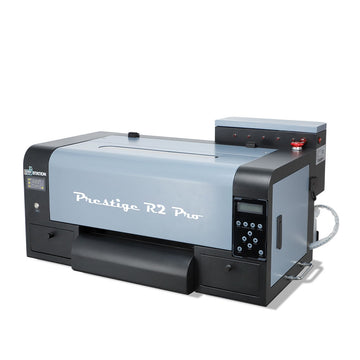
 DTF Station Prestige R2 Pro
 DTF Station Prestige R1
 DTF Station Prestige R2 (original)
 Prestige X6
 DTF Station Prestige A4
 DTF Station Prestige A3+ and A3+ R
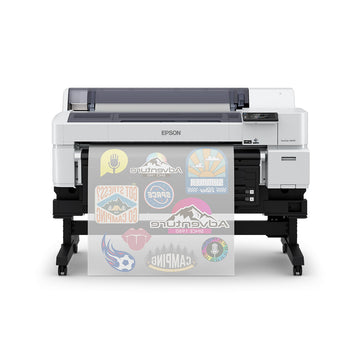
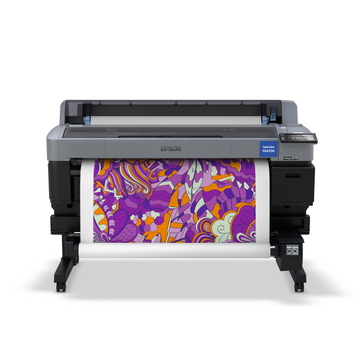
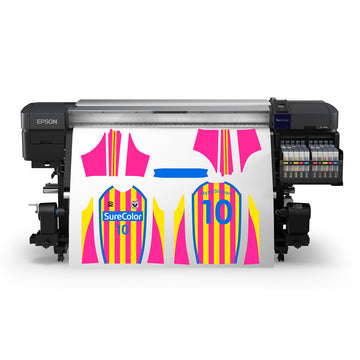
 Epson SureColor G6070 DTF printer
 Mimaki TxF300-1600
 Mimaki TxF330-800
 STS XPD-924D DTF Printer (Mutoh)
 STS VJ-628D DTF Printer (Mutoh)
 DTF Station Vega S17
 STS XpertJet 1682D (XPJ-1682D) 64 inch DTF Printer
 STS XPD-724 DTF Printer (Mutoh)


 Hotronix Fusion IQ, Air Fusion IQ and Dual Air Fusion IQ
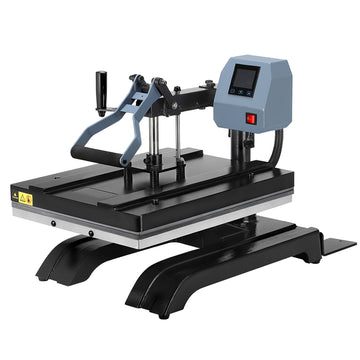
 Geo Knight DK20S and DK20SP Digital Knight Swing-Away Presses
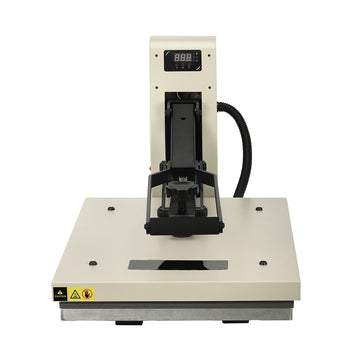
 DTF Station Maxima and Proxima Dual Heat Presses
 Hotronix Auto Open Clam and Hover Heat Press
 DTF Station Prisma Auto Heat Press
 DTF Station Prisma Dual Heat Press
 DTF Station Prisma Swing Heat Press
 Insta 718, 728 and 828 Automatic Swing-Away Heat Presses
 DTF Station Prisma Sentry Heat Press
 Geo Knight DC16 and DC16AP Digital Combo Swing-Away Presses
 Geo Knight DK Digital Clamshell Presses: DK20, DK16, DKA Auto, DK8 Label and DK7 Cap
 Hotronix Auto Open Cap Press and 360 IQ Hat Press
 Hotronix Craft Heat Press 9 x 12
 Hotronix Mighty Mug Heat Press
 Insta 256 and 288 Manual Swing-Away Heat Presses
 Insta 907 Dual Station Shuttle Label Heat Press


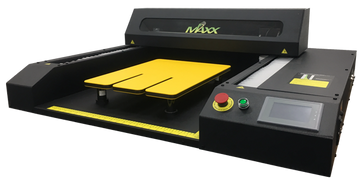
 Viper MAXX pretreatment machine
 Ecofreen Mister-T2 and Mister-T2 Pro pretreatment machines
 Pearl Elite and Pearl PTM DTG pretreatment machines
 Viper XPT-1000 pretreatment machine
 Lawson Silver-Jet and Silver-Jet V2 DTG Pretreat Sprayers
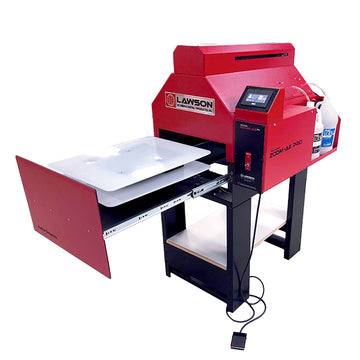
 Lawson Zoom-AE DTG pretreatment machine
 Viper MINI handheld DTG pretreatment machine


Brand
Prestige XL series (L2, XL2, XL2 Pro, XL3, XL4)
DTF Station Prestige R2 Pro
DTF Station Prestige R1
DTF Station Prestige R2 (original)
Prestige X6
DTF Station Prestige A4
DTF Station Prestige A3+ and A3+ R
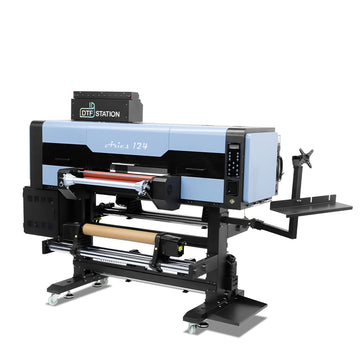
 DTF Station Aries 124 UV DTF printer
 Miro DTF Powder Shakers: Miro 13 Max, 16, 24 and 36
 DTF Station Aries 213 and Aries 113 UV DTF printers
 Seismo L16R and L24R DTF Powder Shaker and Dryer
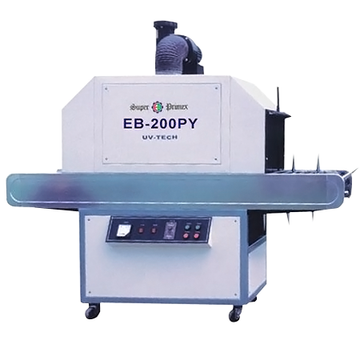
 Phoenix Air 16x20 DTF Curing Oven
DTF Station Maxima and Proxima Dual Heat Presses
DTF Station Prisma Auto Heat Press
DTF Station Prisma Dual Heat Press
DTF Station Prisma Swing Heat Press
DTF Station Vega S17
DTF Station Prisma Sentry Heat Press
 DTF Station Seismo V36R DTF Powder Shaker and Dryer
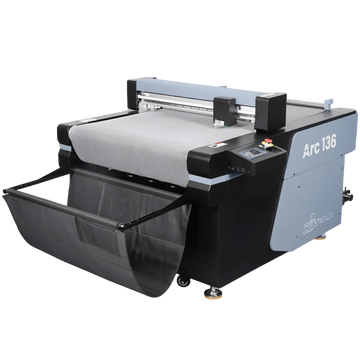
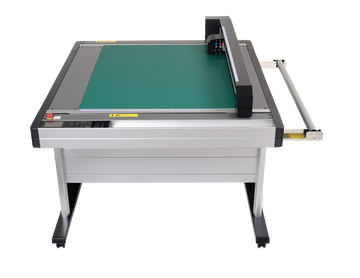
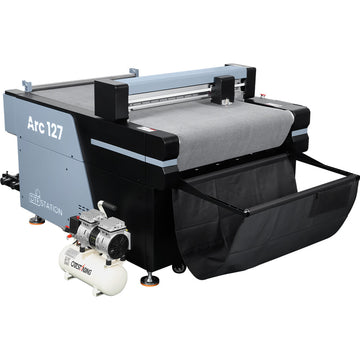
 DTF Station Arc 127 automatic cutter for DTF and UV DTF film
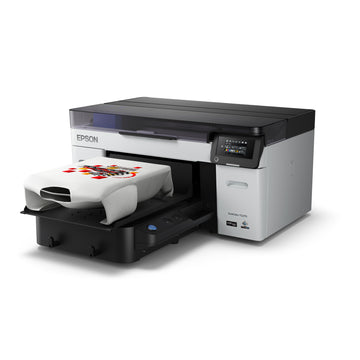
 Epson SureColor F2100
Epson SureColor G6070 DTF printer
 Epson SureColor F2270
 Epson SureColor F3070
 Epson SureColor F570
 Epson SureColor F170
 Epson SureColor F6470 and F6470H
 Epson SureColor F6370
 Epson SureColor F7200
 Epson SureColor P-Series photo printers (P700, P900, P6570, P8570)
 Epson SureColor T-Series CAD and technical printers
 Epson SureColor S-Series (S40600, S60600, S80600)
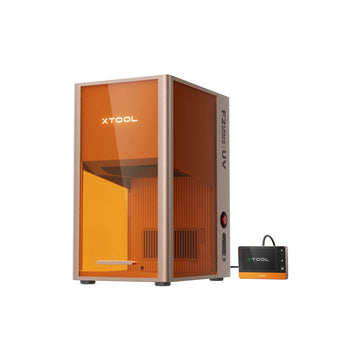
xTool F2 Ultra UV settings basics: official parameters, test matrix, frequency, dwell time and focus
xTool's recommended F2 Ultra UV settings are lab-tested starting points, not guarantees, so pick the material in xTool Studio or xTool's Materials Lab and then run a Material Test Array on your own stock. Higher power, slower speed and more passes all go deeper. Use Dwell Time to stop uneven color from heat build-up on acrylic or synthetic leather, and set focus at mid-thickness when cutting.
Get xTool's tested settings
-
In xTool Studio
Choose Process on flat surface, click Unknown Material, choose the material and click Apply. xTool's settings for the F2 Ultra UV fill in.
-
Or in the Materials Lab
Go to atomm.com/materials-lab, open the Official tab and filter by the F2 Ultra UV. Community settings come from other users and are untested.
-
Then test your own stock
Insert a shape and choose Applications > Material test array. Set the number of rows and columns, the lowest and highest speed and power, and the spacing, choose the processing type, and run it. Pick the square you like. Bitmaps can be tested the same way.
What the settings do
| Setting | Effect |
|---|---|
| Power (%) | Higher goes deeper. 1 to 100. |
| Speed (mm/s) | Slower puts more energy in and goes deeper |
| Pass | More passes, deeper |
| Lines per cm | Line density. 100 lines per cm equals 254 DPI. |
| Frequency | The UV laser runs from 40 to 150 kHz |
| Engraving mode | Bi-directional is faster; uni-directional has crisper edges |
Images and photos
- Dot duration: time spent on each dot. xTool's guidance is over 100 microseconds for stable output, usually 100 to 500. Too long can whiten the result and slows the job.
- DPI: up to 2000. Going past the image's own resolution crowds the dots and can make dark materials look pale.
- Inside glass: for 2D images use a dithering mode such as Jarvis, not Grayscale.
Uneven color on acrylic or leather: Dwell Time
On vector fills, short scan lines can let heat build up and leave blotchy color, especially on acrylic and synthetic leather. Dwell Time adds a short pause at the end of each line so heat can escape.
-
Turn it on
Click the Advanced Settings icon at the bottom right of xTool Studio, switch on Dwell Time and enter a value.
-
Find the shortest value that works
On the real material and design, start around 100 ms and go up in 100 ms steps. Keep the shortest value that gives even color. xTool's reference ranges: acrylic 200 to 350 ms, synthetic leather 150 to 250 ms, wood 100 to 200 ms, paper and card 50 to 100 ms.
Focus is part of the setting
- Engraving: focus on the surface (red and blue spots overlapping).
- Cutting in one pass: xTool focuses at the middle of the material. For 6 mm basswood, focus on a 3 mm piece, then swap in the 6 mm without changing focus.
- Glass surfaces: auto-focus can't see clear glass. Lay paper on it and subtract the paper's thickness, or type in the known glass thickness. xTool puts the usable focal depth on glass at only about 2 to 2.5 mm. Our guide on the F2 Ultra UV not engraving glass covers this in detail.
- Inside glass: no focusing. You enter the glass size and position in xTool Studio and the software places the focal point.
Settings that shatter glass during inner engraving are usually too hot. xTool's advice is lower power, higher speed or a shorter dot time.
Watch xTool's lesson: engraving glass surfaces on the F2 Ultra UV
More videos
Embedded from the manufacturer's official channel.
Common questions
Will xTool's settings work on my glass or acrylic?
xTool says its settings are tested in its lab and can change with room conditions and material differences, and work best on xTool's own materials. Test on your stock first.
I have settings from another UV laser in frequency and Q-pulse. Can I use them?
Yes. xTool Studio expresses the Q-switch duty cycle as power. xTool gives the conversion as D = Q x F / 1000, where Q is the Q-pulse time in microseconds, F is the frequency in kHz and D is the duty cycle in percent. The F2 Ultra UV runs from 40 to 150 kHz.
Which image mode should I use for photos inside glass?
xTool says to use a dithering mode such as Jarvis for 2D images inside glass, and not Grayscale.
Does LightBurn work?
Yes, LightBurn 2.2.0 or later. xTool Studio is xTool's own software and holds xTool's material settings.
How thick can it cut?
In xTool's lab tests, up to 15 mm wood, 12 mm acrylic and 1 mm glass. Expect sloped edges toward the sides of the work area; that is normal for galvo lasers.
- Processing Parameters for xTool F2 Ultra UV
- Processing Parameter Settings for xTool F2 Ultra UV
- Processing Parameters for xTool F2 Ultra UV (Test Matrix)
- Dwell Time for xTool F2 Ultra UV
- Process on Flat Surface with xTool F2 Ultra UV
- FAQs on xTool F2 Ultra UV
- xTool F2 Ultra UV Unable to Achieve Vertical Cuts in Materials
- xTool Materials Lab (official settings)